
There is a phrase that has echoed through boardrooms, marketing departments and LinkedIn feeds for the better part of a decade: “Be authentic.”
It sounds right. It feels modern. It sells books and fills conference stages. And according to rigorous academic research published by the London School of Economics, it is largely wrong.
In December 2025, LSE Business Review published findings from a study that analysed 1,011 LinkedIn posts by chief executives, coding each one for observable cues of credibility. The researchers called their central discovery the “authenticity trap” — the finding that the most common supposedly authentic tactics, casual tone and behind-the-scenes visuals, showed a negative correlation with engagement when stronger credibility signals were absent. In other words, a selfie from the factory floor without a compelling narrative or context is just a picture. An overly casual post from a CEO can erode credibility rather than build it.
This should stop every corporate communications director in their tracks.
For the professional consultancy, technology firm or financial services business investing heavily in visual assets — headshots, PR libraries, executive portraits — the implication is profound. Surface-level authenticity is not just ineffective. It is actively counterproductive. The solution is not to abandon authenticity altogether but to understand that authentic imagery works only when it is grounded in something far more substantial: credibility.
The Problem with Casual
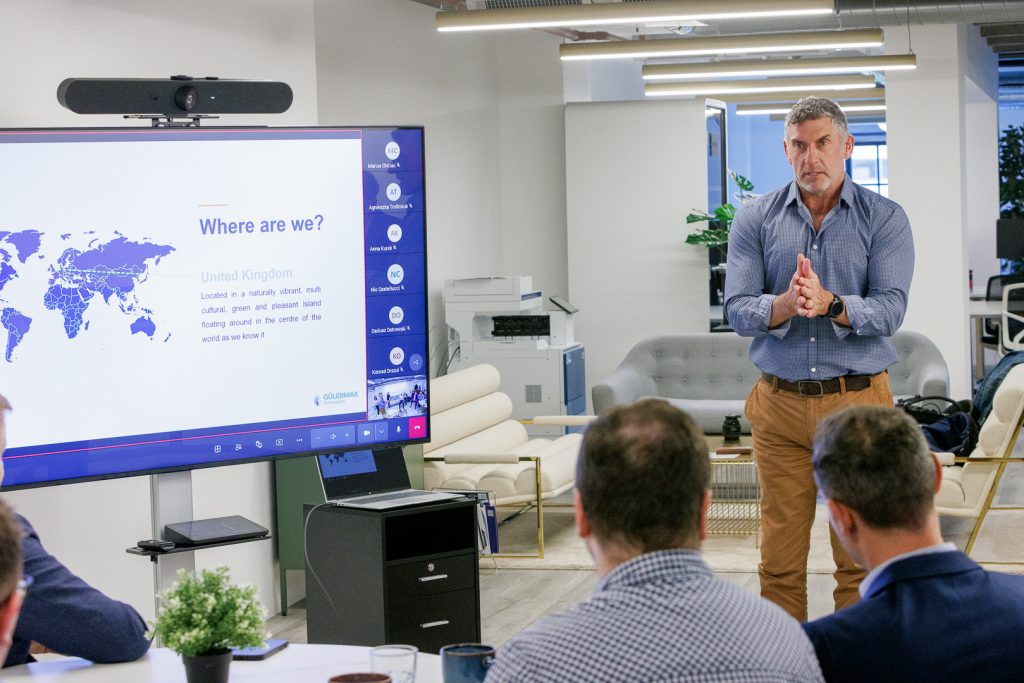
Let us be specific about what the research found. The study identified what it calls “Stylistic Authenticity” — a casual, conversational tone — and “Visual Realism” — unstaged, behind-the-scenes photography. Both of these signals, when deployed alone, correlated negatively with engagement. A leader posting a loosely composed photo with a chatty caption does not become more relatable. They simply become less compelling. The audience, particularly in B2B environments where consultancy, technology and financial services operate, is skeptical and time-poor. They are not looking for personality first. They are looking for proof.
This refutes the simplistic “be more authentic” mantra that has dominated corporate photography trends for years. The instinct to tear down the studio backdrop, ditch the tie and shoot candid moments in the office kitchen is understandable. It is a reaction against decades of sterile, identikit headshots. But it overcorrects. The pendulum swings from rigid formality to performative informality, and neither end of the arc serves the executive who needs to be taken seriously.
The Proof, People, Place Framework
The LSE research offers a rigorous alternative. Drawing on the highest-performing content in the dataset, the researchers identified a three-signal combination they call the “Proof, People and Place” trifecta. Posts that successfully integrated all three elements achieved an average engagement rate 333 percent higher than posts containing none of them.
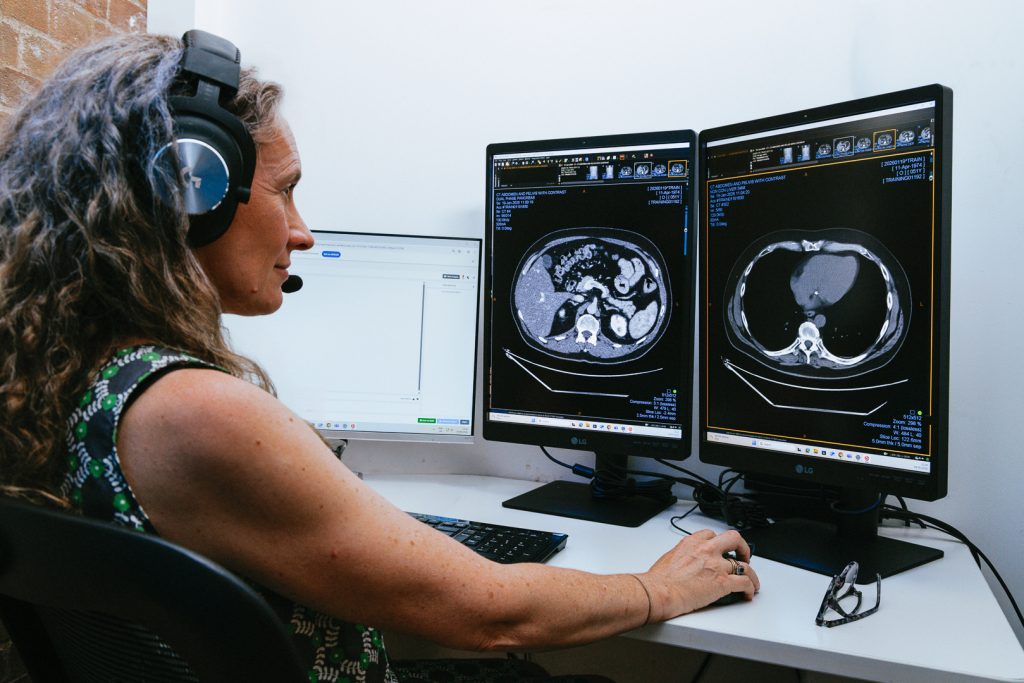
Proof is about verifiable, evidence-based credibility. It moves beyond assertion to demonstration. “We are an innovative company” becomes “Our new process, co-developed with [institution], has reduced waste by 30 percent.” In visual terms, Proof means imagery that shows real work happening — a consultant reviewing a live model on screen, an engineer testing a prototype, an analyst presenting genuine data. Not stock photography. Not staged pretence. Evidence.
People is about third-party validation. Testimonials, partnerships, endorsements. Visually, this means images that show leaders in dialogue with clients, collaborators and peers. A portrait of a CEO alone is a claim. A portrait of that same CEO in conversation with a stakeholder is a claim supported by witnesses.
Place is about contextual grounding. It answers the question: “Is this relevant to me?” A photograph taken in a recognisable office, a specific city, a real boardroom carries far more weight than one shot against a seamless grey background. Place anchors the subject in a world the audience can identify with.
Why This Changes How You Should Brief Your Photographer
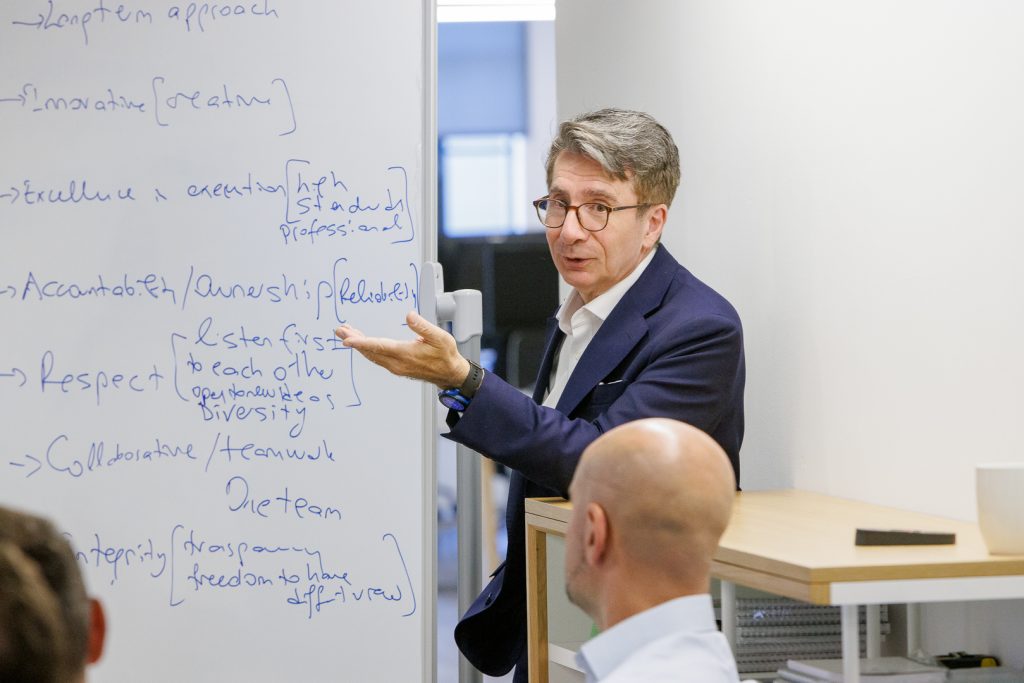
Here is where the research converges powerfully with Studio Grey’s philosophy. The case for authentic office portraits — what we call “working portraits” — was previously built on intuition and aesthetics. It felt right that environmental portraits should outperform studio mugshots. Now there is hard data to support it. Contextual, environmentally grounded imagery corresponds precisely to the Place signal. Images showing real teams collaborating deliver the People signal. Photographs of genuine work being done deliver Proof.
But the research also demands discipline. A relaxed, natural style is not the same as a careless one. An authentic office portrait is not simply a smartphone snap of someone at their desk. It requires expert lighting, deliberate composition and thoughtful direction — the very craft that transforms a photograph from a record into a message. The authenticity must be in the substance, not the surface.
For consultancy firms, this means briefing your photographer to capture consultants working with real client materials (redacted where necessary) in actual meeting spaces. For technology companies, it means showing engineers interacting with real products, not posing beside them. For financial services, it means portraying analysts with genuine data, in authentic environments, surrounded by the visual vocabulary of the profession.

The Multiplicative Effect
Perhaps the most striking finding from the LSE research is that credibility signals are not additive but multiplicative. Their power compounds when layered together. A post with one identifiable signal nearly doubled the baseline engagement rate. Posts with five distinct signals increased it more than fivefold.
Translating this to visual strategy: a single headshot, however well executed, carries only one signal. A library of images — each calibrated for a different audience, each embedded with different combinations of Proof, People and Place — exponentially increases the likelihood that your visual communication lands.
This is the argument for building a PR image library rather than commissioning a single portrait. The chief executive who has one photograph uses it everywhere — for investor presentations, marketplace communications, fundraising pitches and internal announcements. Each audience receives the same signal. But each audience needs different signals. Investors need Proof. The marketplace needs People. Fundraisers need all three. Internal audiences need Place.
One photograph cannot serve all masters. A library can.

The Future of Influence
The LSE researchers conclude with a line that deserves to be pinned to every boardroom wall: “The future of influence belongs not to the loudest or most ‘authentic’ voice, but to the most credible one.”
For leaders in professional consultancy, technology and financial services, this is both a challenge and an opportunity. The challenge is to abandon the comfortable fiction that being relaxed and natural in front of a camera is sufficient. The opportunity is to invest in visual assets that carry genuine credibility signals — images rooted in real places, populated by real people and supported by real evidence.
At Studio Grey, we have always believed that a portrait is not just a picture. It is a message. The LSE research confirms what we have practised for years: that message must be credible, contextual and carefully constructed. The era of the generic headshot is over. The era of credible visual communication has arrived.
The question for your business is simple. Are your visual assets merely authentic — or are they credible?
About the Author
Mark Grey is the lead photographer at Studio Grey, directing operations from the firm’s central London base on Fleet Street. Recognised as a specialist in corporate portraiture for the UK’s leading professional services firms, Mark combines artistic direction with strategic insight to deliver imagery that serves business objectives beyond mere decoration. His approach is grounded in the belief that professional photographs must signal credibility, context and competence—essential assets for consultancies, tech innovators and financial institutions navigating complex stakeholder landscapes. With a portfolio defined by technical excellence and a track record of helping executives transition from static studio profiles to dynamic PR libraries, Mark transforms traditional headshooting into a disciplined practice of visual communication.