
In financial services, the relationship between trust and capital is absolute. Investors part with money based on confidence — confidence in the strategy, the team, the track record and the leadership. Every element of investor communication is calibrated to build that confidence. Presentations are polished. Numbers are audited. Projections are stress-tested. And then, sitting alongside all of that rigour, is a headshot from 2019 that the CEO happened to have on file.
This inconsistency is not merely cosmetic. It is a credibility leak. And the London School of Economics has quantified exactly why.
What Investors Actually See

The LSE study, published in December 2025, analysed 1,011 LinkedIn posts by chief executives and identified a framework that is particularly resonant for investor communications. The researchers found that the single most effective combination of credibility signals — one that produced a 333 percent uplift in engagement — consists of Proof, People and Place.
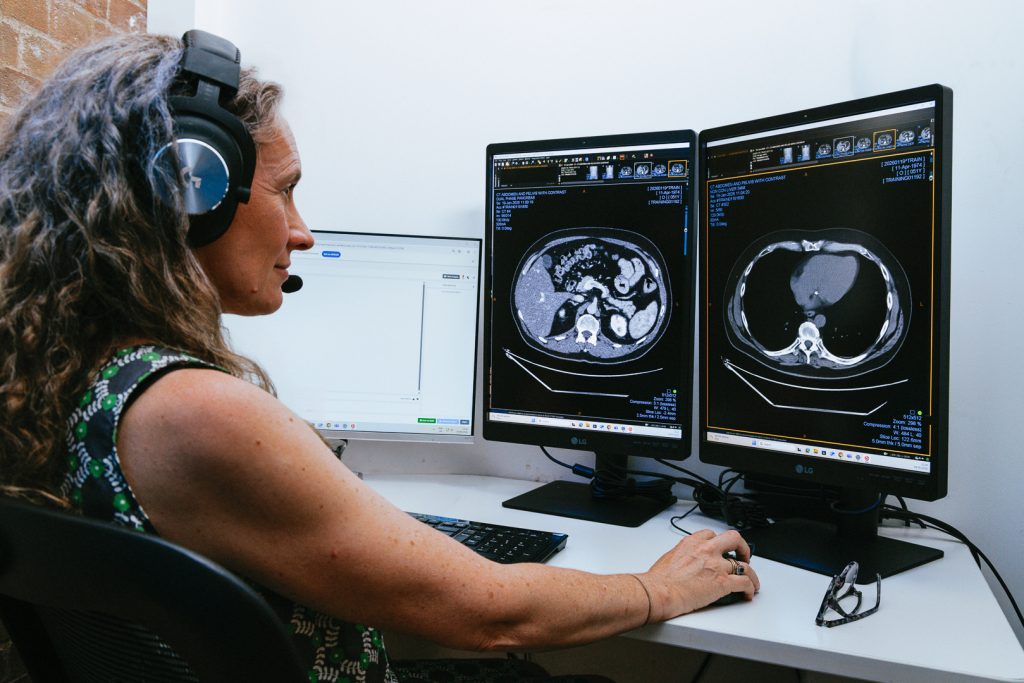
Proof is the signal investors need most. They want verifiable, evidence-based credibility. “We are an innovative company” becomes “Our new process, co-developed with [institution], has reduced waste by 30 percent.” In visual terms, Proof means imagery that shows real work: an analyst presenting genuine data, a CEO reviewing actual performance metrics, a team examining a live deal model on screen. Not representations of work. Evidence of work.
People is the signal of validation. Investors derive confidence from knowing that others trust you — partners, clients, board members, advisors. Imagery showing leaders in dialogue with these stakeholders delivers this signal with far greater potency than a lone portrait ever can.
Place is the signal of context. An investor evaluating a financial services firm wants to know that the operation is real, substantial and grounded. Environmental portraits in authentic offices, trading floors and meeting rooms carry this signal naturally. A studio backdrop carries nothing.
The Single-Portrait Problem in Investor Relations

The traditional approach to investor relations photography is the worst of all worlds. The CEO has one portrait — formal, studio-shot, several years old — and it appears in every investor context: the pitch deck, the annual report, the LinkedIn profile, the press release announcing a funding round, the conference programme for an investor summit.
The LSE research explains precisely why this fails. Credibility signals are not additive but multiplicative. They compound when layered together. A single image carries a single signal register. It cannot simultaneously serve investor confidence, marketplace positioning, fundraising narrative and internal culture. It is one note where a chord is required.
Consider the specific investor communications that require visual support. A Series B pitch deck needs imagery conveying momentum and scale. An annual report needs portraits that convey stewardship and accountability. A fundraising announcement needs images that signal ambition and capability. A regulatory filing needs dignified, authoritative portraits. An investor day needs dynamic, engaging imagery showing leadership in action. These are not the same image. They are not even the same genre.
Building the Investor-Facing Library
The solution, as demonstrated in Studio Grey’s chief executive case study, is the structured visual library. When Tony Brown of Total Health needed imagery for a major publication feature, Studio Grey did not produce a single portrait. They produced a library.
The process began with a deceptively simple question: “What do you want to achieve?” The answers revealed multiple audiences — potential clients, suppliers, competitors, investors — each requiring messages with subtly different emphasis. From this, a shot list was developed: a visual representation of each image needed to support the various arguments.
The shoot itself moved through three phases. Studio portraits provided the controlled, authoritative imagery suitable for formal contexts — annual reports, regulatory filings, board communications. In-office environmental shots created documentary-style images showing Tony at work — suitable for investor presentations, marketplace communications and LinkedIn content. Outdoor lifestyle portraits provided relaxed, human imagery — suitable for fundraising narratives, internal communications and broader PR.
Each phase produced images carrying different combinations of credibility signals. Together, they formed a resource that could be deployed surgically across every investor-facing context.
The Fundraising Dimension

Fundraising communications carry a particular visual burden. They must simultaneously convince investors of past performance (Proof), demonstrate market validation (People) and ground the opportunity in a tangible reality (Place). Few visual tasks are more demanding.
A fundraising pitch accompanied by a single studio headshot is communicating only one thing: what the CEO looks like. A fundraising pitch accompanied by a visual library — the CEO presenting at an industry conference (People + Place), the team analysing data in their actual office (Proof + Place), the founder in dialogue with a strategic partner (People + Proof) — communicates a narrative of credibility before the financial model is even opened.
The LSE researchers note that credibility signals multiply. A post with one signal nearly doubles baseline engagement. Five signals increase it more than fivefold. Translated to fundraising, this means that each additional credibility signal in your visual assets measurably increases the likelihood that your pitch lands. Not because the imagery is more attractive, but because it carries more evidence.
The AI Question

The LSE research raises a point of growing relevance to investor communications. The researchers observe that “many leaders now use artificial intelligence to draft social posts, which makes warmth and fluency cheap. That does not mean the post is wrong. It means the reader has less reason to believe it.”
The same logic extends to visual assets. AI-generated imagery is becoming ubiquitous. It is fluent, polished and entirely synthetic. An investor who suspects that the imagery accompanying a pitch is AI-generated has less reason to believe the pitch itself. Genuine, professionally crafted photography of real people in real places is an increasingly valuable signal precisely because it is difficult to fake convincingly.
For financial services firms, where trust is the fundamental product, this matters acutely. The visual assets accompanying investor communications are not supplements to the narrative. They are evidence within it. They say: these are real people, in a real office, doing real work. That is the message investors need to receive, and it cannot be delivered by a studio portrait or a stock image.
The Asymmetry of Effort
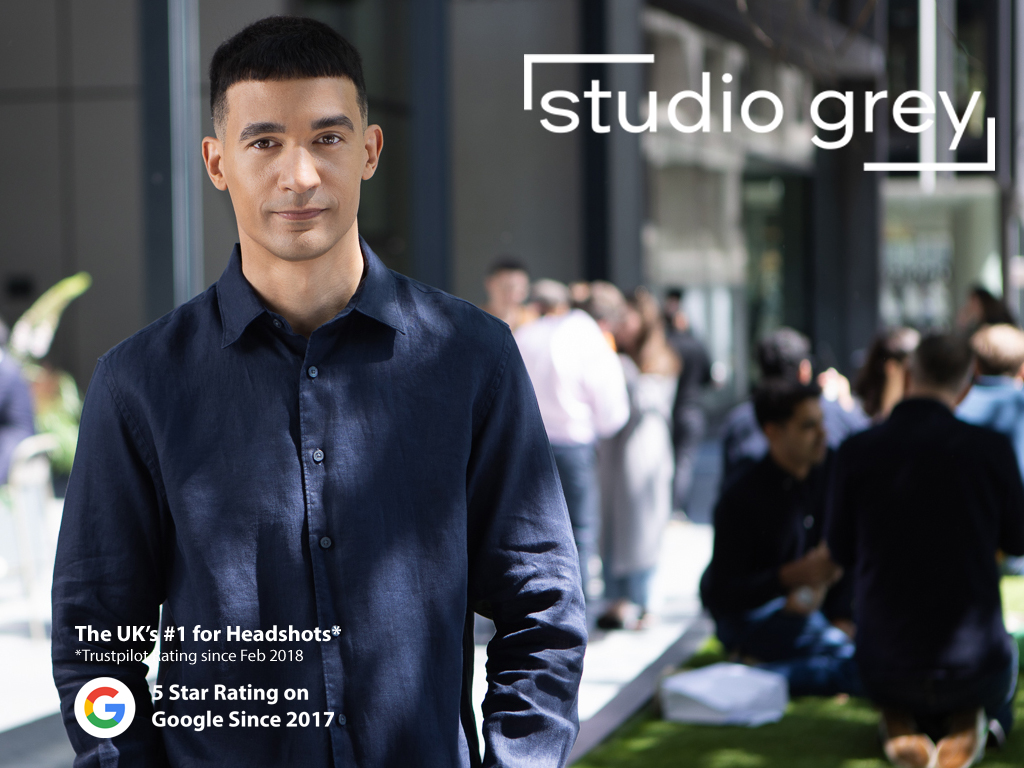
The effort required to build an investor-facing visual library is modest — a single structured shoot producing dozens of publication-quality images. The return on that effort is asymmetric: images that serve across years of investor communications, fundraising rounds, PR placements and social media engagement.
The firms that understand this — that treat investor-facing imagery as a strategic asset rather than a box-ticking exercise — find their communications consistently outperforming those of competitors who still rely on the single, ageing studio portrait. The data is now clear. The LSE research confirms what experience has long suggested. The question is whether your firm will act on it.
About the Author
Mark Grey is the lead photographer at Studio Grey, directing operations from the firm’s central London base on Fleet Street. Recognised as a specialist in corporate portraiture for the UK’s leading professional services firms, Mark combines artistic direction with strategic insight to deliver imagery that serves business objectives beyond mere decoration. His approach is grounded in the belief that professional photographs must signal credibility, context and competence—essential assets for consultancies, tech innovators and financial institutions navigating complex stakeholder landscapes. With a portfolio defined by technical excellence and a track record of helping executives transition from static studio profiles to dynamic PR libraries, Mark transforms traditional headshooting into a disciplined practice of visual communication.